

𝗘𝗻𝘃𝗶𝗿𝗼𝗻𝗺𝗲𝗻𝘁𝗮𝗹 𝗰𝗿𝗲𝗱𝗶𝘁𝘀 𝗮𝗿𝗲 𝗯𝗲𝗰𝗼𝗺𝗶𝗻𝗴 𝗺𝗼𝗿𝗲 𝗳𝗶𝗻𝗮𝗻𝗰𝗶𝗮𝗹𝗹𝘆 𝗺𝗮𝘁𝗲𝗿𝗶𝗮𝗹 — 𝗮𝗻𝗱 𝗙𝗔𝗦𝗕 𝗧𝗼𝗽𝗶𝗰 𝟴𝟭𝟴 𝗶𝘀 𝗻𝗼𝘄 𝗽𝗿𝗼𝘃𝗶𝗱𝗶𝗻𝗴 𝗮 𝗱𝗲𝗱𝗶𝗰𝗮𝘁𝗲𝗱 𝗮𝗰𝗰𝗼𝘂𝗻𝘁𝗶𝗻𝗴 𝗳𝗿𝗮𝗺𝗲𝘄𝗼𝗿𝗸.
🌍 As carbon markets, emissions trading programs, renewable energy certificates, and environmental compliance mechanisms continue to expand globally, organisations are increasingly managing environmental credits and related obligations as part of their business operations.
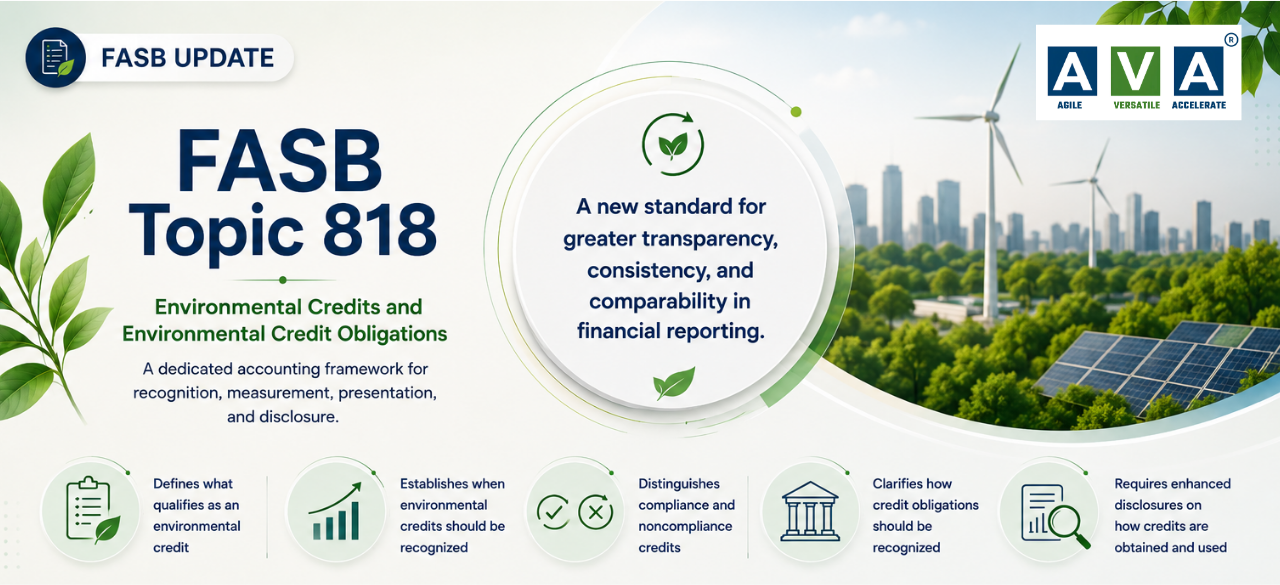
To improve transparency, consistency, and comparability in financial reporting, the Financial Accounting Standards Board (FASB) has introduced 𝗧𝗼𝗽𝗶𝗰 𝟴𝟭𝟴 – Environmental Credits and Environmental Credit Obligations.
The standard establishes a dedicated accounting framework for the recognition, measurement, presentation, and disclosure of environmental credits and environmental credit obligations.
📌 𝗪𝗵𝗮𝘁 𝗱𝗼𝗲𝘀 𝗙𝗔𝗦𝗕 𝗧𝗼𝗽𝗶𝗰 𝟴𝟭𝟴 𝗰𝗼𝘃𝗲𝗿?
✔️ Defines what qualifies as an environmental credit
✔️ Establishes when environmental credits should be recognized as assets
✔️ Distinguishes between compliance and noncompliance environmental credits
✔️ Clarifies how environmental credit obligations should be recognized and measured
✔️ Requires enhanced disclosures on how credits are obtained, used, and valued
📌 𝗪𝗵𝘆 𝗱𝗼𝗲𝘀 𝘁𝗵𝗶𝘀 𝗺𝗮𝘁𝘁𝗲𝗿?
Historically, organisations have applied different accounting approaches to environmental credits, creating inconsistencies in financial reporting.
The new guidance aims to:
➡️ Improve financial transparency
➡️ Enhance investor and stakeholder confidence
➡️ Increase comparability of environmental credit-related financial information
➡️ Provide clearer visibility into environmental compliance obligations
📌 𝗔𝗻 𝗶𝗺𝗽𝗼𝗿𝘁𝗮𝗻𝘁 𝗰𝗹𝗮𝗿𝗶𝗳𝗶𝗰𝗮𝘁𝗶𝗼𝗻
FASB Topic 818 focuses on financial accounting and financial statement disclosures.
It does not address greenhouse gas emissions reporting, sustainability reporting frameworks, or voluntary net-zero commitments. Those areas continue to be covered through broader ESG and sustainability reporting standards.
🚀 The direction is clear:
As environmental credits become increasingly integrated into regulatory compliance programs and market-based sustainability mechanisms, organisations will need stronger governance, accounting controls, and disclosure practices to manage these evolving financial impacts effectively.